Two ways to send a message
SMS is the standard text-message service provided through a mobile carrier. It sends short text messages to a phone number using the carrier’s mobile service, without requiring the sender or recipient to open a particular chat app. Internet messaging uses an app or online service to send messages over a Wi-Fi or mobile-data connection. People generally need access to the same service, or to compatible services, to exchange messages this way.
A phone’s messaging app may handle more than one type of message, so the difference is not always obvious on screen. For example, a conversation might use an internet-based service when it is available and fall back to SMS in some circumstances. Check the label or details shown by your app if knowing how a message will be sent matters.
Connections: what works where?
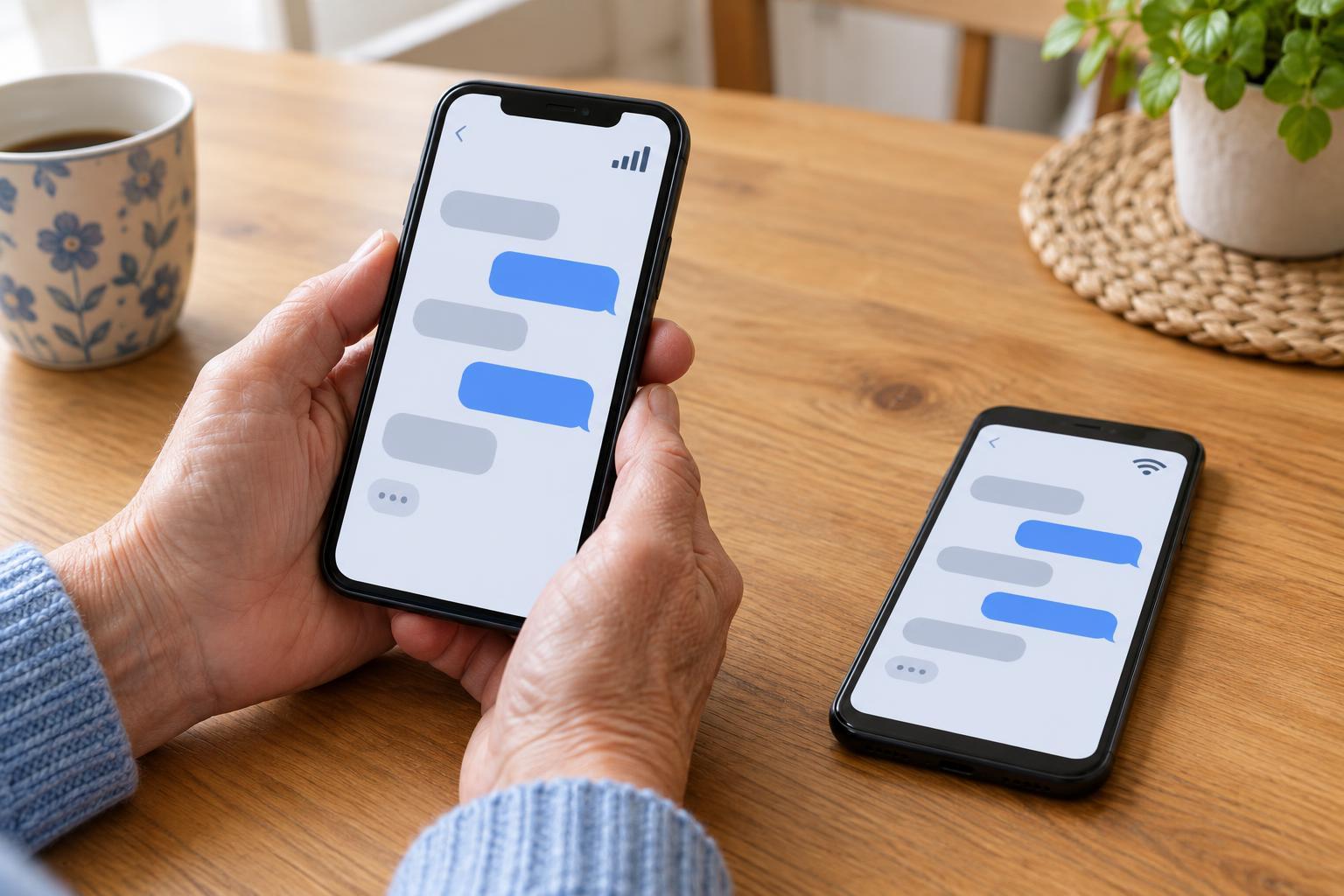
SMS can be useful when you have carrier service but no working internet connection. It does not normally depend on a Wi-Fi network or a mobile-data allowance. It still requires a suitable mobile connection, however, and a message may be delayed or fail where carrier coverage is poor. Having an internet connection alone does not guarantee that ordinary SMS will work.
Internet messaging needs a working internet connection at both ends for prompt delivery. Wi-Fi can make it useful indoors or in places where mobile-data service is weak, provided the Wi-Fi connection works and the service is available. Some apps hold messages and deliver them when a device reconnects; SMS may also be delayed until carrier service returns. Neither method guarantees an immediate reply, even when an app displays a delivery indicator.
If you are arranging to meet someone in an area with uncertain coverage, agree on a backup plan beforehand. A message that has been sent is not necessarily a message the other person has seen.
Costs depend on your plan and connection
The cost of SMS depends on your mobile plan. Some plans include a set number of texts or unlimited domestic texting; others charge per message. International texting and use while roaming may have different rates. Before sending many messages abroad, check your carrier’s terms rather than assuming the price matches a local text.
An internet messaging app may not charge for each message, but the connection can still have a cost. Messages sent over mobile data count toward any applicable data allowance, and roaming data can be costly depending on your plan. Text-only messages usually use little data compared with sending photos, videos or voice recordings. On Wi-Fi, charges depend on the network or service you are using.
Also distinguish SMS from MMS, which is often used for pictures or group messages in a phone’s standard messaging app. MMS may have different pricing and connection requirements. If a conversation switches between message types, the cost may change without the wording of your message changing.
Features beyond a short text
SMS is well suited to brief messages sent to phone numbers, including contacts who do not use a particular app. It is also commonly used to deliver sign-in codes and service notifications. Because it is basic, SMS does not reliably offer the same features as an internet chat, such as large file sharing, voice calls, message reactions or synchronized conversations across devices.
Internet messaging services often provide group chats, photos, documents, voice notes and calling. They may also show when a message was delivered or read, although those indicators depend on the service, settings and connection. These features can make a shared app convenient for a family, team or community group, but only if the intended participants can and want to use it.
Some phones also support RCS, a newer carrier-associated messaging standard with features that can resemble an internet chat. Its availability and behavior vary by device, carrier and messaging app. Rather than relying on a feature name, check what your own conversation supports and what happens when you message someone using a different setup.
Choose with privacy and accessibility in mind
Standard SMS is not generally end-to-end encrypted. Some internet messaging services offer end-to-end encryption, meaning the service is designed so that only conversation participants can read message contents, but protection varies by app and may vary by chat type or settings. Encryption also does not prevent someone with access to an unlocked device from reading messages. For sensitive information, check the service’s settings and be careful about what you share.
The easiest option is not always the same for everyone. A recipient may have limited data, an older phone, accessibility needs or a preference not to install another app. Ask which channel works for them, especially when setting up a group. For everyday coordination, choose the method both sides can reliably access, confirm important details when needed, and keep an alternative way to get in touch.