Why a follow-up matters
An online meeting can feel productive while leaving people with different ideas about what was agreed. Someone may have lost their connection, joined late, or been unable to attend. A brief written follow-up gives everyone the same starting point for the work that comes next.
The aim is not to produce a transcript. Most readers need to know what changed, what remains undecided, and whether they need to do anything. For a community group, that might mean confirming the location of an event and identifying who will bring supplies. For a work team, it might mean recording which draft will be reviewed and when comments are needed.
Collect the essentials before writing
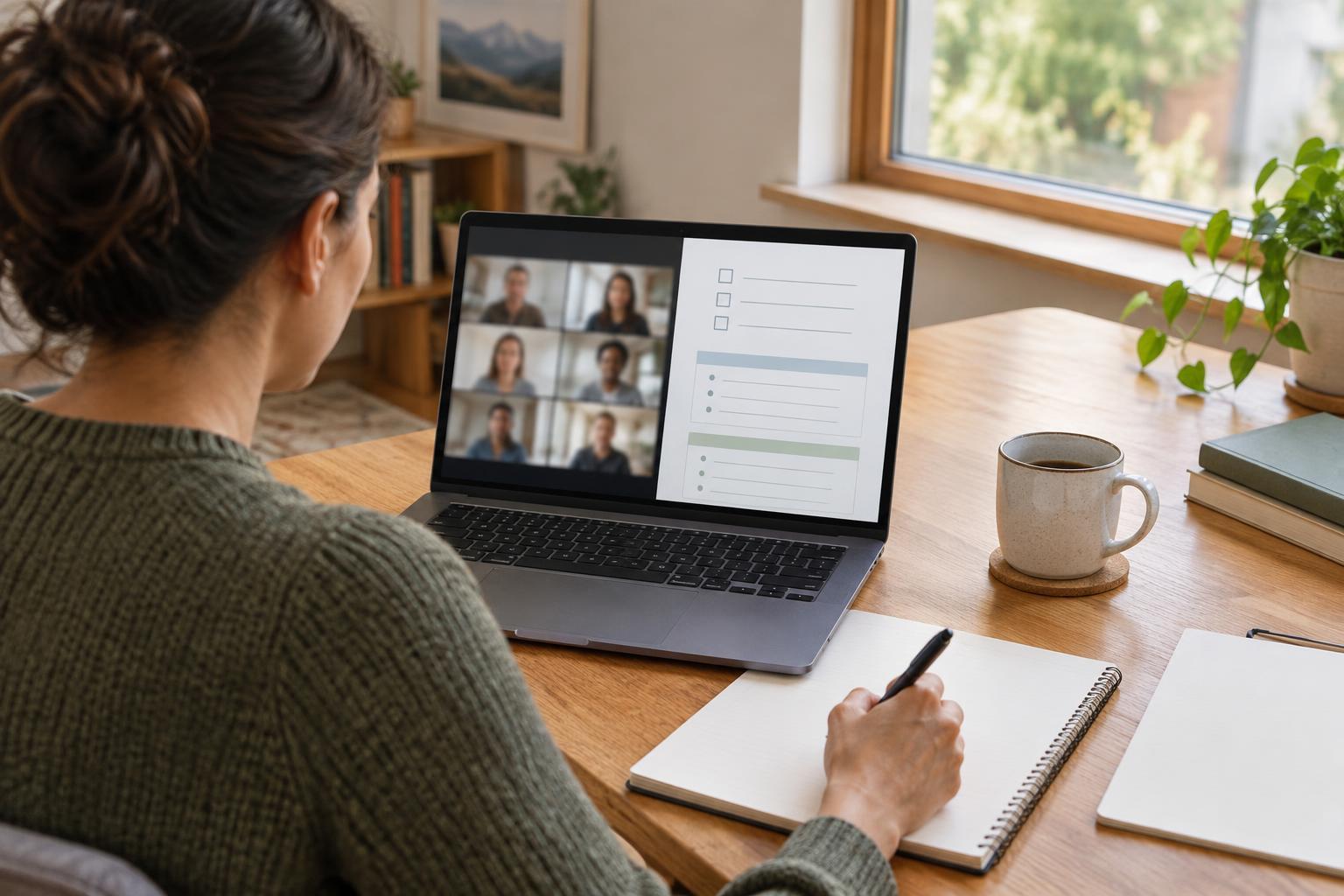
If you are responsible for the follow-up, jot down key points during the meeting rather than relying on memory afterward. Listen for explicit decisions, requests, volunteers, and deadlines. When a next step sounds unclear, ask the group to confirm it before the call ends. A simple question such as “Who will send the revised version?” can prevent several messages later.
Before writing, check whether your notes separate decisions from suggestions. “We could meet on Thursday” is not the same as “We agreed to meet on Thursday.” If you are unsure, describe the point as an open question and ask for confirmation. It is better to show uncertainty than to present a proposal as a settled plan.
Put the most useful information first
Give your message a specific subject line, such as “Follow-up: garden planning meeting and next steps.” In the opening sentence, name the meeting and state the purpose of the message. Then present the outcome in a few short paragraphs: decisions made, actions to take, and questions still open. Readers should be able to find their own next step without reconstructing the conversation.
For each action, include the task, the person or group responsible, and the agreed time frame, if there is one. If no one accepted responsibility, do not assign the task in your notes. Say that an owner still needs to be agreed. Use ordinary terms rather than unexplained abbreviations, especially when the message will reach people who missed the meeting.
Make the message easy to use
Keep the follow-up short enough to scan, but include enough context for nonattendees. For example, “We chose the smaller room because it has step-free access” explains a decision more helpfully than “Room changed.” You do not need to repeat every opinion that led to it. If an important document was discussed, name it clearly and explain what readers should do with it.
A follow-up should also make it easy to correct mistakes. End with a clear request, such as asking participants to reply by an agreed time if you missed a decision or recorded an action incorrectly. If a response is needed from everyone, say so. If no reply is needed unless something is wrong, say that instead. These small distinctions reduce unnecessary messages.
Check the audience and sensitive details
Before sending, check the recipient list. The people who need the outcome may not be identical to everyone invited to the meeting. Consider whether a person who could not attend needs the full follow-up, and whether anyone outside the group should receive only a shorter update. Avoid forwarding the entire discussion when a concise summary will do.
Leave out personal details that are not needed to act on the decisions. If someone described a private reason for missing a deadline, the follow-up can usually record the new deadline without repeating that reason. Check that any document you mention is shared with the intended readers, and do not assume that a recording is an adequate substitute for notes. A thoughtful follow-up helps people participate without requiring them to watch a whole meeting to discover what happens next.