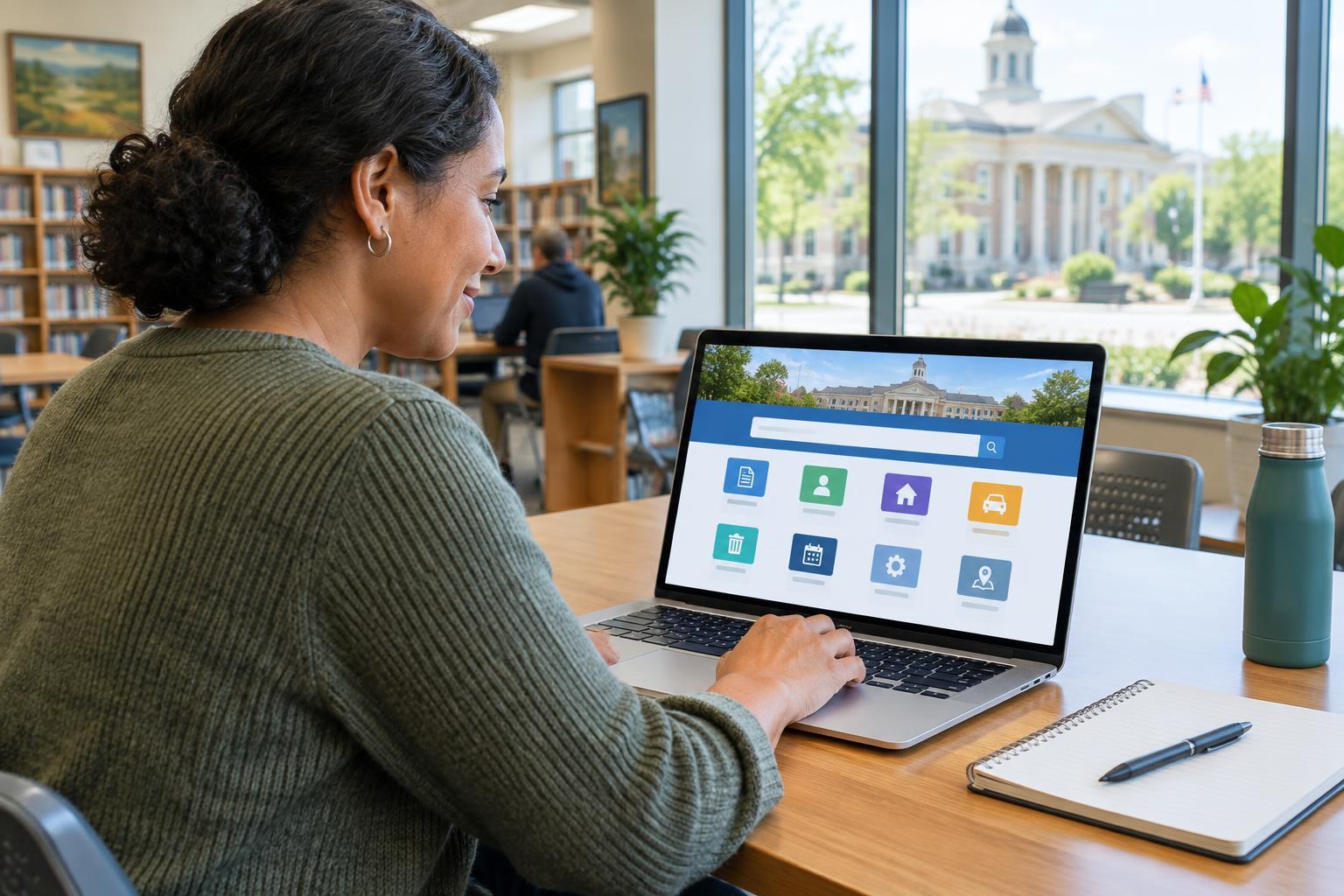
Start with the task, not the channel
Paying a bill, changing an address, applying for support, and resolving an error may all involve the same organization, but they do not require the same kind of contact. Before choosing a website, phone line, or office visit, write down what you need to accomplish. Note any deadline, whether you must provide documents, and whether you need an explanation or a decision from a person.
Check which routes the service offers for that specific task. A website might accept payments but direct appeals elsewhere; an office might require an appointment even if it accepts walk-ins for other matters. Look for the organization’s own contact and accessibility information rather than assuming every channel can handle every request.
When online access works well
Online services can be useful for straightforward tasks you want to complete outside office hours, such as checking an account, booking an appointment, or submitting a form. They may let you review entries before sending them and save a confirmation. They work best when you have reliable internet access, a suitable device, and a way to complete any sign-in steps.
Look at the whole process before you begin. Do you need to create an account, receive a code, scan a document, or upload a file in a particular format? Can you save a form and return later? If instructions are unclear or a page is difficult to use with your device or assistive technology, contact the service through another listed route and ask how to complete the task. Do not keep resubmitting a form if you are unsure whether it went through; check for a reference number or confirmation first.
Use the service’s official website or app, particularly when entering personal details. If you are using a shared device, sign out when finished and avoid saving passwords in the browser. Keep a copy of the confirmation in a place you can find again, without storing sensitive information somewhere others can easily access it.
When a phone call is the better choice
A phone call can help when you need to ask a question, describe an unusual situation, or find out which form applies. It can also be a useful alternative when an online process is not accessible to you. The trade-offs may include opening hours, hold times, and the difficulty of recalling detailed instructions afterward.
Prepare a short summary of your request and have any relevant account or reference number nearby. Ask the person you speak with to repeat unfamiliar terms, explain the next step, and tell you when to expect a response. Write down the date, the department or name given, and any reference number. If hearing, speaking, or language is a barrier, check whether the service lists relay, interpretation, or other communication options. Availability varies, so ask about an alternative if the listed option does not meet your needs.
Take care with unexpected calls. If someone asks for sensitive details and you cannot verify who they are, end the call and contact the organization using a number you found independently.
When visiting in person may help
An in-person visit may suit a task that requires original documents, identity checks, or a conversation that is hard to manage by phone or online. It can also help if you need assistance reading or completing a form. Visiting takes travel time, however, and the right staff member may not be available without an appointment.
Before setting out, check the location, opening hours, appointment rules, and documents to bring. If you need step-free access, a quieter space, interpretation, or another adjustment, ask what is available in advance where possible. Bring a brief list of questions and copies of documents when appropriate, while keeping originals secure. Before leaving, confirm what happens next and whether you should expect a letter, call, or online update.
Combine routes when one is not enough
You do not have to use a single channel from start to finish. You might phone to clarify requirements, submit a form online, and visit an office only if documents must be checked there. Choose the route that lets you complete the task accurately and leaves you with a clear record of what you have done.
If a process stalls, use your confirmation or reference number when following up. Explain what you have already tried, what response you received, and what you need next. Ask whether another route or an accessible format is available. The best option is not necessarily the fastest one to start: it is the one you can use, understand, and follow through to a clear outcome.